
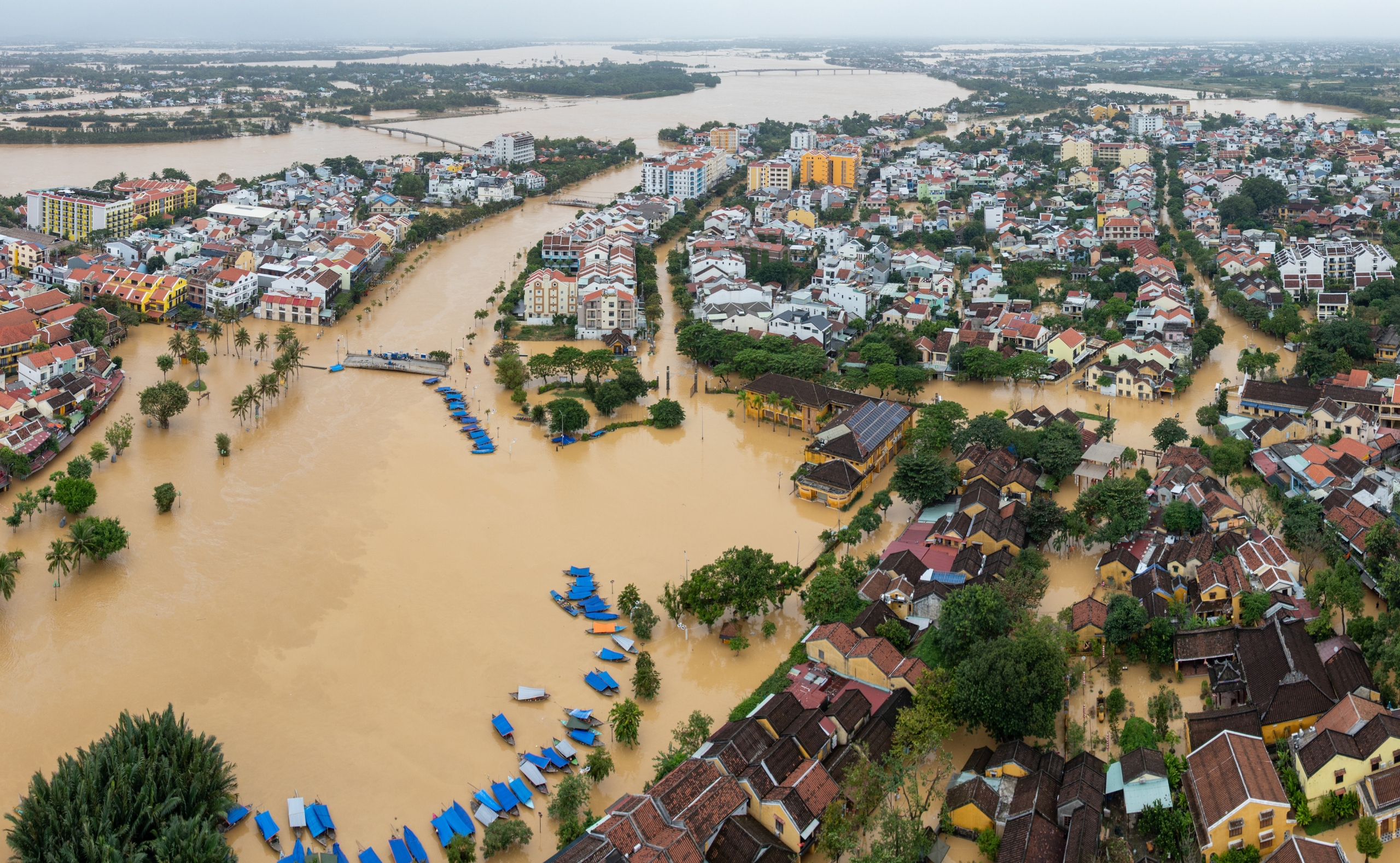
Climate-related disasters are becoming one of Asia’s most important economic and fiscal challenges. Floods, typhoons, droughts, and heatwaves are occurring with greater frequency and severity, generating rising economic losses, damaging infrastructure, disrupting supply chains, and increasing fiscal pressures on governments.
Climate risk management can therefore no longer be treated simply as an environmental issue. Traditionally, disaster risk financing has focused on risk transfer mechanisms and post-disaster public financing. While these instruments remain important, rising climate risks are highlighting the need for a broader approach to resilience—one that combines risk reduction, risk transfer, and fiscal preparedness.
Why Adaptation and Risk Transfer Must Be Integrated
International experience in disaster risk financing increasingly emphasizes a layered approach to managing climate-related disasters. This approach combines three policy layers. The first layer focuses on reducing expected losses through adaptation and resilience investments. The second layer addresses residual risks through financial instruments, including insurance, contingent credit lines, regional risk pools, and catastrophe bonds. The third layer consists of post-disaster financing measures, such as emergency borrowing, budget reallocation, and external assistance, which remain necessary after severe disasters.
While all three layers play important roles, the relationship between the first and second layers is becoming increasingly important as climate risks intensify. Adaptation investments reduce underlying physical risks and help improve the affordability, availability, and effectiveness of insurance and capital market instruments. Conversely, where climate risks are poorly understood or excessively high, insurance markets can become prohibitively expensive or unavailable.
Yet despite these strong interconnections, the three layers are often developed and implemented separately through different institutional and policy frameworks. Adaptation policies are frequently managed by environmental and infrastructure agencies, while risk transfer mechanisms are developed by insurance markets and financial institutions. As a result, opportunities for coordination are often missed.
The Importance of Climate Risk Data
Effective climate risk management therefore requires an integrated framework that connects adaptation, risk transfer, and post-disaster financing. A critical foundation for this integrated approach is climate risk data. Effective adaptation and risk transfer both depend on a common analytical framework that combines hazard, exposure, and vulnerability information.
Hazard assessments identify the probability and intensity of climate events. Exposure data show where assets, infrastructure, and populations are located. Vulnerability assessments estimate the extent of potential damage under different climate scenarios. When these datasets remain fragmented across institutions, climate risk management becomes inefficient. Governments may invest in adaptation without fully understanding evolving risks, while insurers and investors face difficulties in pricing disaster-related risks. Integrated climate risk data systems are therefore becoming an increasingly important public good.
Building Fiscal and Financial Resilience in Asia
These issues are particularly important for Asia, where climate risks are intensifying while insurance penetration and fiscal space often remain limited. Regional sovereign risk pools, such as the Southeast Asia Disaster Risk Insurance Facility (SEADRIF), are emerging as important mechanisms for improving financial protection and rapid post-disaster liquidity. For example, following severe flooding associated with Typhoon Yagi in 2024, SEADRIF provided a rapid insurance payout to Lao PDR, demonstrating the value of pre-arranged financial protection.
At the same time, catastrophe bonds and other insurance-linked securities are gradually expanding the role of capital markets in sovereign disaster risk financing. A notable recent example is the Asian Development Bank’s (ADB) inaugural Disaster Relief Bonds issued in 2026 for the Kyrgyz Republic and Tajikistan, which provide parametric protection against earthquake and extreme precipitation risks. These transactions suggest that development institutions are playing a growing role in connecting sovereign disaster risk financing with capital markets.
Nevertheless, important challenges remain. Adaptation finance continues to be constrained by limited risk data, fragmented governance arrangements, and difficulties in measuring resilience outcomes. Data gaps not only complicate adaptation planning but also make it more difficult to assess and price disaster risks. As a result, risk transfer instruments such as catastrophe bonds can remain costly, particularly in developing economies where historical loss data and risk models are limited. For example, ADB’s recent Disaster Relief Bonds carried risk margins of 600 basis points above the benchmark rate, illustrating the substantial premiums investors may require to assume disaster risks. Risk transfer mechanisms also face basis risk and limited investor participation. Highly correlated climate risks across countries can further reduce the diversification benefits of regional risk pools.
For Asia, the policy priority is therefore not simply to expand insurance coverage or climate finance. It is to build an integrated climate risk management framework that connects risk data, adaptation investment, financial protection, and fiscal planning. As climate-related disasters intensify across the region, strengthening resilience will increasingly depend on integrating risk reduction and risk transfer rather than treating them as separate domains.