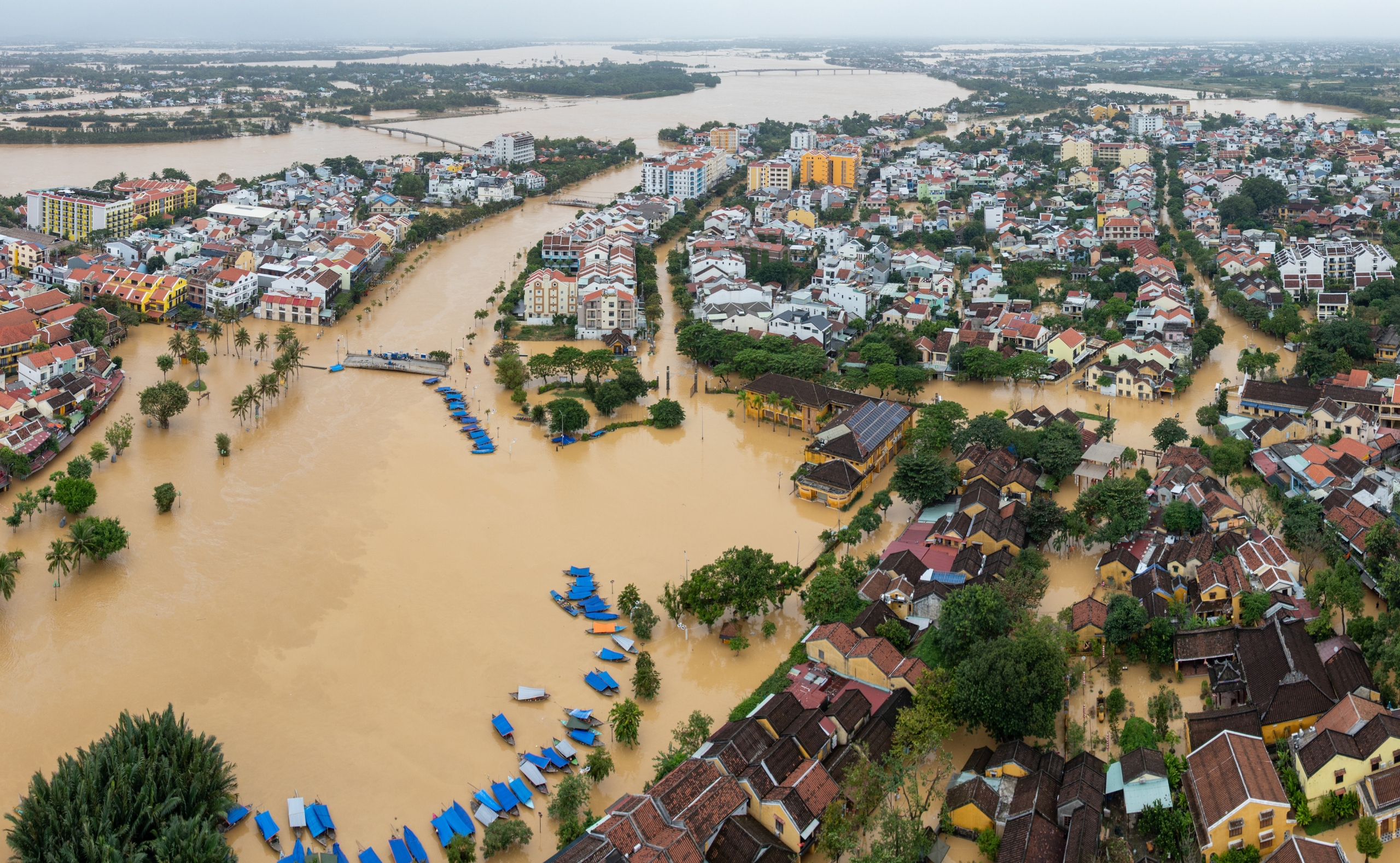

As the world’s attention turns to Belém, Brazil, for COP30, the threats that climate change poses to global food and nutritional security must be top of the agenda. Without urgent action on adaptation and mitigation, climate change will push millions more into hunger and malnutrition, reversing decades of progress toward eradicating food insecurity.
While food security often dominates the discussion, nutritional security—the ability to access safe, diverse, and nutrient-rich food—receives far less attention. Rising atmospheric carbon dioxide levels are already reducing the concentrations of essential micronutrients, such as iron, zinc, and protein, in cereals and legumes. Meanwhile, the erosion of agrobiodiversity and growing dependence on calorie-dense, nutrient-poor diets are worsening both hidden hunger and obesity.
The impacts fall hardest on the most vulnerable, including smallholder farmers, women, and low-income consumers. Climate change is amplifying existing inequalities in access to resources, opportunities, and nutrition. When food and input prices rise, low-income households are the first to compromise on dietary diversity.
What can be done to arrest this multidimensional threat to food and nutritional security?
Women are central to household food provision and childcare, and their limited resources directly affect family nutrition. Addressing gender disparities is therefore critical for building climate-resilient and equitable food systems. Women farmers need secure land rights, access to credit and agricultural extension services, and modern technologies, including improved seeds, farm machinery, and digital tools. When women are empowered, families, communities, and ecosystems all benefit.
Climate-smart agriculture offers a pathway to integrate productivity, adaptation, and mitigation goals. Scaling up stress-tolerant crop varieties, improving irrigation efficiency, and promoting conservation agriculture can help stabilize yields and reduce greenhouse gas emissions. Integrated systems linking crops, livestock, forestry, and aquaculture can enhance soil fertility, biodiversity, and ecosystem services while increasing income and resilience.
Preserving and promoting traditional knowledge can also contribute significantly to climate mitigation and adaptation. Community-driven approaches such as community seed banks and agroforestry can strengthen local capacities and resilience. At the same time, digital innovations such as artificial-intelligence-based advisory systems, precision agriculture, and digital finance platforms can optimize water and soil management while reducing risk.
These solutions require the backing of strong institutions and supportive markets that can incentivize sustainable production. Ministries of agriculture, health, environment, and education must work together to ensure coherence in policy and action. Multi-stakeholder platforms that bring together governments, development banks, private-sector actors, and civil society can generate synergies across sectors. Regional cooperation, including through organizations such as the Association of Southeast Asian Nations and the South Asian Association for Regional Cooperation, can further advance South–South learning, technology transfer, and policy harmonization to accelerate collective progress toward climate-resilient food systems.
Investment and finance are also critical. Blended finance, green bonds, and climate funds can mobilize public and private capital for nutrition-sensitive, low-carbon agriculture. Incentives such as payments for ecosystem services and carbon credits can further attract private investment in sustainable production.
The National Adaptation Plans encouraged by the COP30 Presidency provide an important opportunity for governments to integrate food and nutritional security into their climate strategies. These plans should include measures to protect livelihoods as part of broader strategic roadmaps for climate resilience.
Building climate-resilient and nutrition-sensitive food systems is both possible and essential. A comprehensive strategy that combines climate-smart agriculture, gender-responsive social protection, innovative financing, and regional cooperation can transform the way food is produced and consumed. Without such action, climate change will continue to erode hard-won gains in food security and nutrition. Ensuring food and nutritional security in a changing climate is not only a developmental necessity—it is a moral imperative