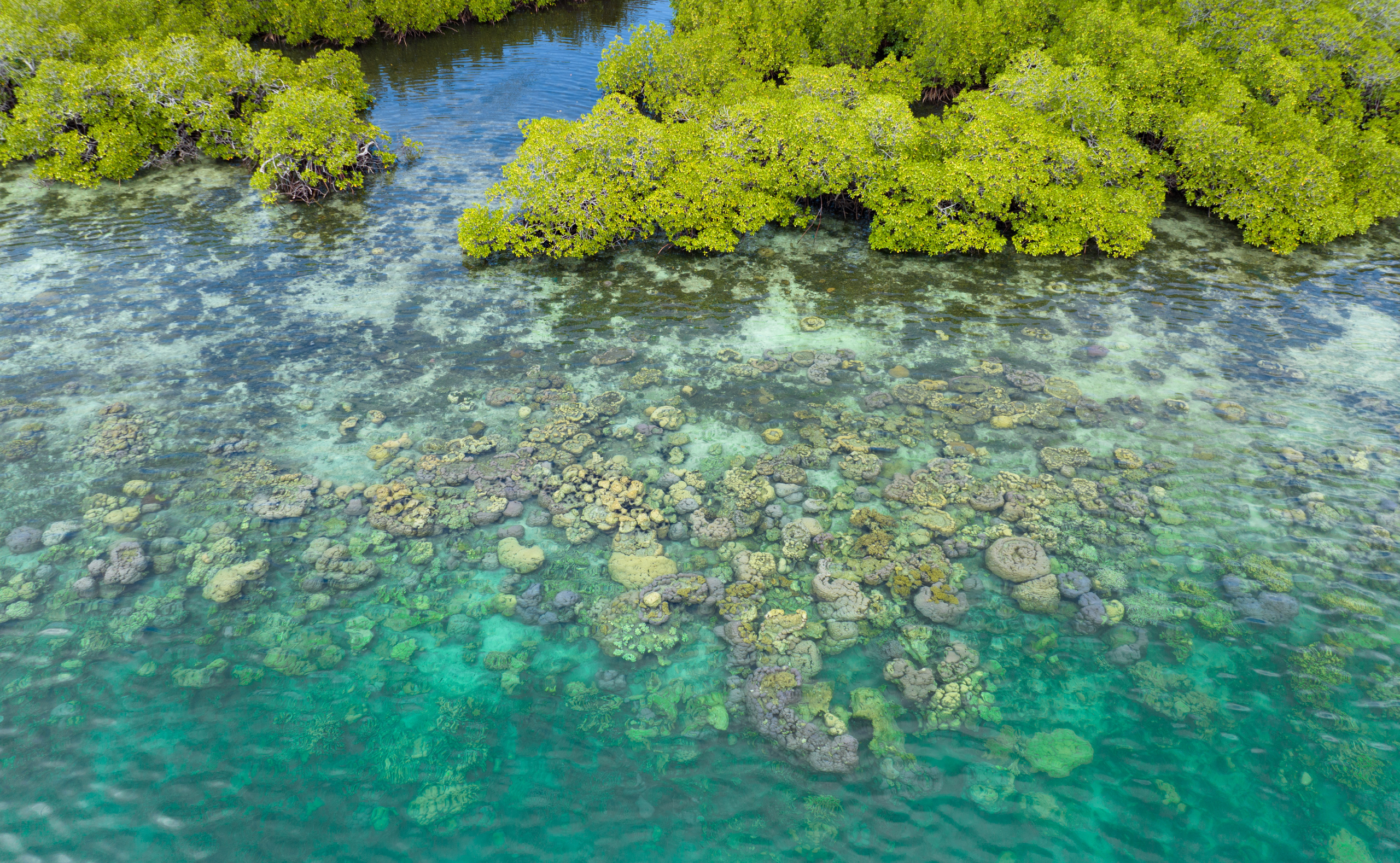
Healthy oceans are vital to the well-being and economic prospects of billions of people across Asia and the Pacific, which is home to about 85% of the world’s fishers and aquaculture workers. This dependence is especially pronounced in Pacific Island Countries (PICs), where communities rely heavily on marine ecosystems for ensuring food security, generating livelihoods, and supporting local economies. These ecosystems, including mangroves, coral reefs, and seagrass beds, also serve as critical natural infrastructure that protects communities from the impacts of sea-level rise and extreme weather, sustains rich biodiversity, and sequesters significant amounts of carbon. Building sustainable and resilient blue economies is therefore essential for PICs to safeguard livelihoods, strengthen food security, and enhance their capacity to withstand climate and economic shocks. Doing so will require greater investment in sustainable ocean-linked industries alongside stronger protection for the natural ecosystems that underpin long-term development and resilience.
The Blue Economy Finance Gap
While the blue economy plays a vital role in driving sustainable development across the region, significant structural barriers continue to limit the scale and effectiveness of investment. First, the small domestic market size and geographical isolation of PICs make it difficult to achieve economies of scale and attract private investors. Second, high project preparation costs and a limited pipeline of bankable projects increase risks, which are further compounded by climate vulnerability and debt sustainability concerns. Moreover, without the necessary enabling policies and regulatory frameworks, investors lack confidence in developing sustainable blue economy sectors, further limiting access to long-term and local-currency financing.
These structural barriers pose serious consequences for PICs, as they can contribute to the ongoing degradation of marine ecosystems, missed opportunities for sustainable job creation and economic diversification, and continued reliance on concessional financing and external support.
Blue Impact Finance as a Catalyst for Transformation
Addressing these constraints requires the mobilization of new sources of capital, as well as a rethinking of how blue economy and ocean-linked projects are financed. By 2030, the blue economy financing gap in Asia and the Pacific could reach $5.5 trillion, while the vast majority of financing in PICs continues to come from public and concessional sources rather than private investment.
In this context, blue impact finance offers a promising pathway for unlocking new sources of capital, including institutional investors, philanthropic capital, and blended finance instruments, by aligning financial returns with measurable environmental and social outcomes. By linking investment performance to outcomes such as ocean health, climate resilience, and sustainable livelihoods, blue impact finance can help channel both public and private investment into innovative and underfunded blue economy projects and sectors. These include sustainable fisheries and aquaculture, nature-based solutions for coastal protection such as mangroves, marine waste management and circular economy solutions, eco-tourism, and resilient coastal infrastructure.
Leveraging Blended Finance and Innovative Financial Instruments
Building on blue impact finance, blended finance and innovative financial instruments can play a critical role in expanding investable opportunities. Combining public, concessional, and private capital can also help to de-risk investments, improve project bankability, and attract a wider range of investors to blue economy sectors, especially in PICs.
Several instruments are already gaining traction. Blue bonds and sustainability-linked bonds are mobilizing more private sector capital for investments in ocean-linked industries by connecting ocean-positive financing to measurable environmental outcomes. Risk-sharing mechanisms, such as guarantees and first-loss capital, can also help unlock private investment by lowering risks and improving investor confidence. Additionally, PICs can consider debt-for-nature swaps, which provide an opportunity for countries to reduce debt burdens while channeling resources into marine conservation and climate resilience.
Building Bankable Investment Pipelines in PICs: A Key Role for Policymakers
The effectiveness of blue impact finance, blended finance, and innovative financial instruments will ultimately depend on the ability of PICs to develop a robust pipeline of bankable projects that can attract investors. Governments can lead by designing clear blue economy finance strategies and incorporating them into their national plans. Policymakers should also help to ensure that the enabling policy and regulatory environment promotes investor confidence and aligns public and private financing with sustainability and climate resilience objectives.
Finally, it is essential to continue to build new partnerships and collaborate with diverse stakeholders, from development finance institutions to foundations, research institutes, and the private sector, to develop projects that are scalable and attractive to investors. Closing the blue economy financing gap will require more than capital alone. It demands a coordinated approach across sectors and ministries to ensure that the oceans and livelihoods of billions are protected for generations to come.