Time is running out in the fight against climate change. With damage already unfolding, the crisis is not a zero-sum game in which one country’s loss is another’s gain. It is a global problem, and the benefits of action extend to all.
This creates a familiar challenge. Countries may delay action and hope others pay the cost. When too many take that approach, cooperation breaks down, and everyone is worse off. Few places show this more clearly than the Hindu Kush Himalaya (HKH), where climate change poses serious risks to lives, livelihoods, and ecosystems.
The HKH region is often called the “Third Pole” because it stores more snow and ice than anywhere on Earth outside the Arctic and Antarctic. It plays a vital role in shaping water supplies and ecosystems far beyond the mountains themselves. The Hindu Kush range is about 800 kilometers (km) long, but the broader HKH region extends roughly 3,500 km. This connected landscape is home to globally important biodiversity hotspots and extraordinary biological diversity, including rare and endangered mammals, birds, and alpine ecosystems uniquely adapted to extreme conditions.
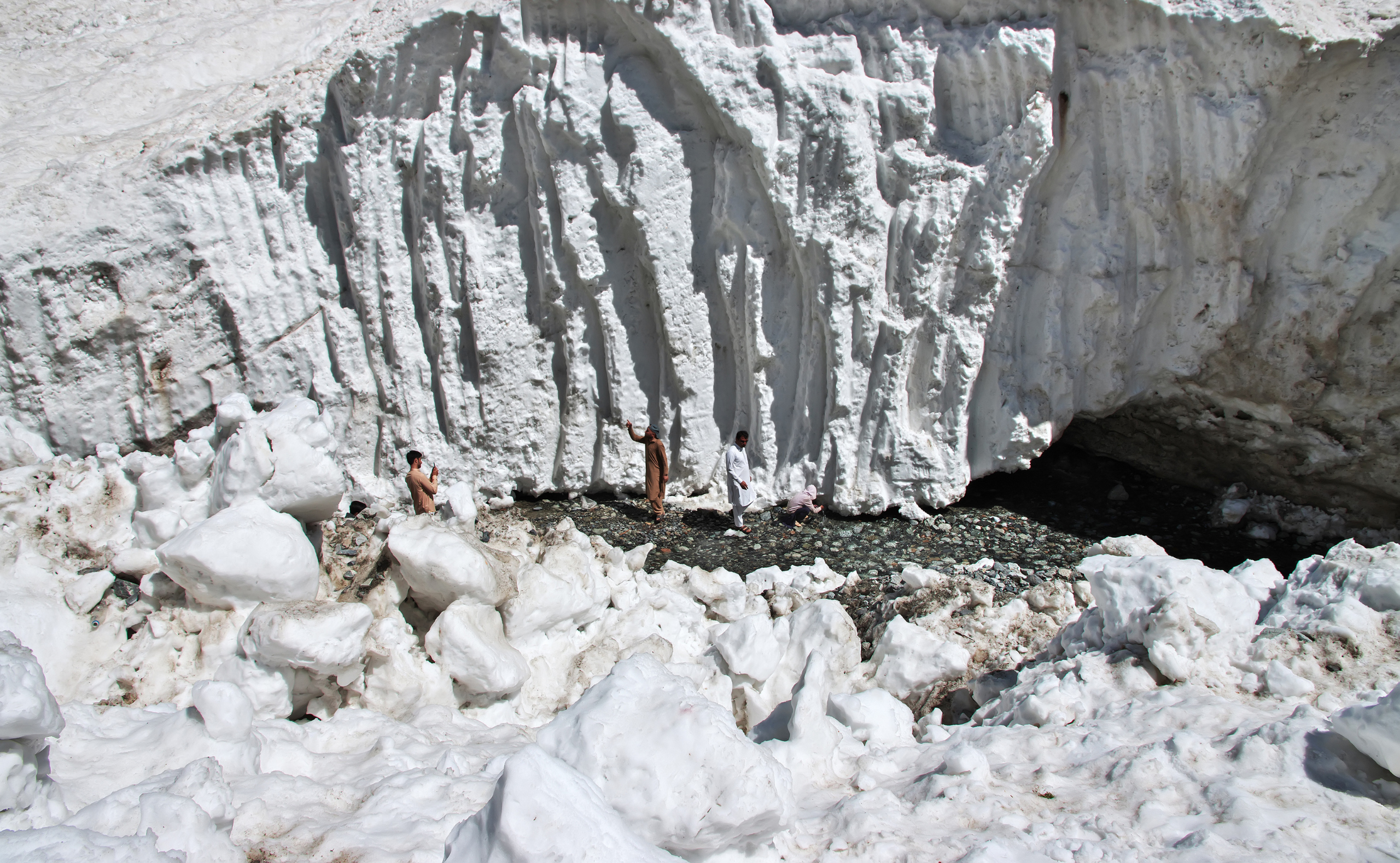
What makes the HKH so important is not only its beauty but the services it provides. Its glaciers and snow feed river basins and provide freshwater services to approximately 240 million people in the mountains and around 1.65 billion people downstream. One striking sign of change is the retreat of major glaciers. The Gangotri Glacier alone has retreated by more than 1,500 meters since 1935. When glaciers shrink faster, the problem is not just the loss of ice but also changes to seasonal water timing and the increased probability of wider shocks that are difficult to manage through short political cycles and fragmented governance.
Rapid melting is also causing glacial lakes to expand. When the natural dams holding these lakes in place collapse, the result can be a glacial lake outburst flood. These floods can be catastrophic, killing people, destroying infrastructure, and imposing heavy economic losses. A stark example came in 2023 at South Lhonak Lake in India, where a glacial flood caused severe infrastructure damage and contributed to the failure of a hydropower dam. Early reports indicated 102 deaths. This example and others like it are not isolated events. They are warnings of growing and compounding risks.
The HKH is a shared asset, and its stability depends on collective action. When the world underinvests in climate mitigation and adaptation, the region absorbs that failure in the form of rising hazards and mounting uncertainty. This is why the HKH story is not just a local one, even if the impacts start in remote valleys. The region is the source of several major Asian river systems, linking upstream cryosphere change to downstream food systems, urban water supply, and energy reliability. In an interconnected world, climate disasters in the Hindu Kush can propagate through trade, migration, and fiscal channels. What begins as a localized hazard can become a regional and sometimes global economic shock.
Many people outside the region do not see the link between changing temperatures, glacier retreat, and downstream vulnerability. This weakens political pressure to act. Within the region, farmers often experience the impacts directly, but limited education and information gaps can make the climate connection harder to identify and plan for. The region contains roughly 54,000 glaciers, yet only 38 are monitored systematically. This leaves major gaps in early warning systems and risk management. Meanwhile, local governments frequently lack the resources to finance large‑scale adaptation and risk reduction without external support. The coordination failure of monitoring and preparedness spills across borders, but the costs fall on limited local budgets.
Although the HKH supports around 1.6 billion people downstream, it is often treated as distant because the most visible impacts occur in remote mountain communities. Research suggests that large cities dependent on glacier‑fed water may not yet be feeling the most severe impacts, encouraging delayed responses. Meanwhile, the communities facing the immediate risks remain underprepared for disasters such as glacial lake floods. This gap increases the danger of long‑term instability as livelihoods come under greater strain, potentially driving displacement and local conflict.
The policy lesson is simple: waiting for a full‑blown crisis is the most expensive strategy. Climate cooperation needs mechanisms that change incentives so that cooperation becomes more attractive than free‑riding. At the local level, this means supporting climate‑resilient livelihoods. Investment in education and vocational training can help households diversify beyond location‑dependent agriculture, reducing vulnerability when floods, droughts, or crop failures hit.
Additionally, investments are needed in climate‑resilient infrastructure, including reinforced riverbanks, safer roads and bridges, robust building standards, irrigation improvements, and risk‑informed hydropower planning. These investments can reduce the probability that climate shocks turn into humanitarian disasters.
Most importantly, the HKH story demands cooperation at scale. Climate risks cross borders, so data sharing, monitoring, early warning systems, and adaptation finance must be able to do the same. Climate change is not a zero‑sum game. It is a problem with shared risks, and the price of non‑cooperation is paid in lives, livelihoods, and long‑run development losses.
The Hindu Kush Himalaya is the Third Pole’s reminder that the world cannot free‑ride forever. If the world keeps treating it as someone else’s problem, the costs will continue to rise through greater economic losses, growing infrastructure risks, and worsening water insecurity for hundreds of millions of people. In a connected system, we all live downstream.