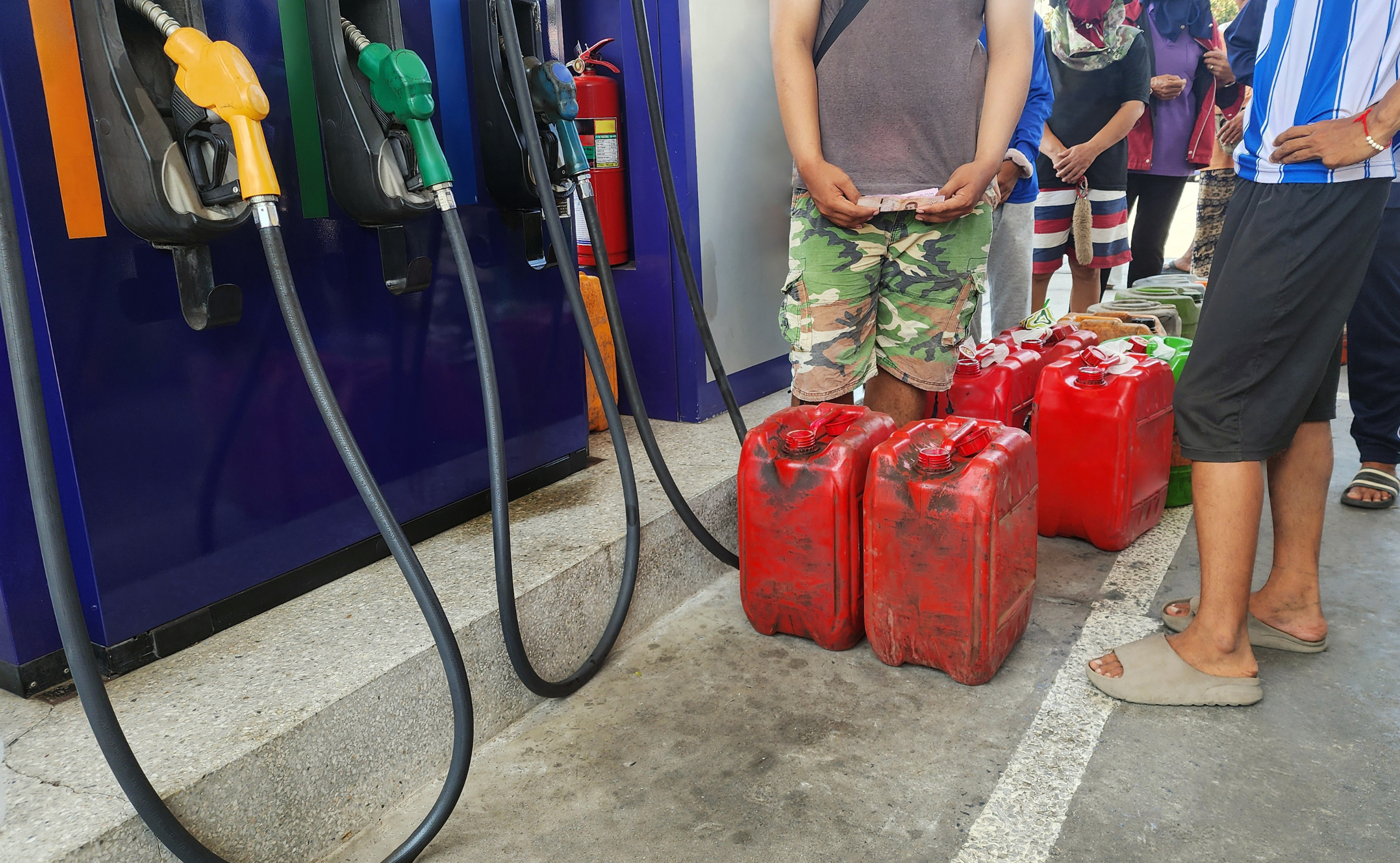
As the conflict between the United States and Iran continues and the Strait of Hormuz remains closed, Southeast Asia continues to face up to its energy security problem. The gap between the scale of the energy shock and the scale of the response is at the heart of the issue, and the numbers explain why.
Crude and oil product flows through the Strait of Hormuz collapsed from over 20 million barrels a day before the war to around 3.8 million by early April. Roughly 25 percent of the world’s seaborne oil trade normally moves through the channel, most of it bound for Asia. The IEA has since coordinated its largest-ever release of emergency oil stocks, and its Executive Director described the situation as the greatest threat to global energy security in history. Southeast Asia, which still sources around 60 percent of its oil from the Middle East, has been at the receiving end of every shock.
Yet ASEAN’s architecture for petroleum security is thinner than the moment requires. The ASEAN Framework Agreement on Petroleum Security, signed in 2009 and renewed in Kuala Lumpur in October 2025, activates only after a member state experiences a shortfall of at least 10 percent of its normal domestic requirement for 30 consecutive days. Assistance is then negotiated bilaterally on a commercial basis. There is no minimum stockholding obligation, no central stockholding entity for the region, and no platform to coordinate cross-border holdings. The 2009 design also predates today’s gas reality. The war has reduced global liquefied natural gas supply by around 20 percent, and Southeast Asia is on track to become a net gas importer by the late 2020s.
Europe responded to its own vulnerability by building a binding system. Council Directive 2009/119/EC requires every European Union member state to hold oil stocks equivalent to at least 90 days of net imports or 61 days of consumption, whichever is greater. As of May 2025, the bloc held 108.6 million tonnes of emergency stocks, with 12 percent held in other member states under rules that allow obligated parties in one country to keep reserves in another. To make that cross-border layer work, the European Commission launched the XEOS web platform in June 2023, which coordinates requests, verifies compliance, and reduces duplicative storage costs across the single market. Solidarity is not negotiated case by case during a crisis. It is engineered into the architecture before one arrives.
This is where ASEAN’s wider regional cooperation and integration agenda becomes operational rather than rhetorical. Regional cooperation and integration a core pillar of the ADBI flagship programme on quality growth, launched in December 2025, and for ADB it is one of the seven operational priorities of ADB Strategy 2030.
Three lessons from Europe deserve consideration. First, binding minimum stocks work because they are predictable. A graduated rule, calibrated to import dependence and fiscal capacity, would convert the existing ASEAN signal into a credible commitment. Second, cross-border holdings let smaller economies participate without bearing the full infrastructure cost, since storage in regional refining hubs can cover obligations elsewhere. Third, coverage cannot stop at crude oil. With Southeast Asia’s growing dependence on imported gas, a sharing framework that ignores LNG and downstream products is already obsolete.
Financing is the piece most missing from current discussion. ASEAN has shown it can raise capital for power generation and transmission through the ASEAN Infrastructure Fund and the ASEAN Power Grid Financing Initiative, which the Asian Development Bank and the World Bank launched together in October 2025. The Ad Hoc Senior Officials Meeting on Energy on 24 April 2026 explicitly opened the door to similar support for emergency response. A dedicated regional reserve facility, anchored in this same family of institutions, could pool costs across the membership and operationalise risk-sharing at scale.
Energy reserves are a textbook regional public good. Benefits accrue to all members during a crisis, national-only systems are duplicative, and the collective action problem cannot be solved bilaterally. The shock of 2026 has made the case more sharply than any policy paper. Whether ASEAN’s integration agenda delivers under stress will be measured not by ratifying APSA again, but by building the rules, the platform, and the financing layer that make solidarity operational. The next disruption will not wait.