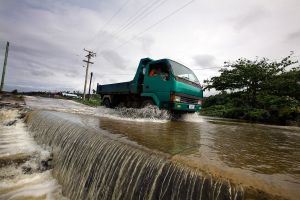
Recent decades have witnessed a rapid expansion of production networks and supply chains in East and Southeast Asia, made possible by underlying forces of technological advances and reductions in trade barriers and driven by pursuit of economies of scale and agglomeration, and greater efficiency and lower costs. The successful functioning of such finely constructed and balanced production networks and supply chains rests, however, on the premise of there being no major disruptions to the system, including natural disasters. Historical data indicate that the East and Southeast Asia region is, in fact, especially prone to a variety of natural hazards (earthquakes, tsunamis, floods, and typhoons). [Read more]
About Minquan Liu
Minquan Liu is a Senior Research Fellow with ADBI. Previously, he was Professor and Chair of the Department of Development Economics, School of Economics, Peking University, and the Founding Director of the Center for Human and Economic Development Studies (CHEDS), Peking University.The PRC must invest in education for sustained development
Among the many challenges facing the People’s Republic of China (PRC) in the coming decades, the most important is its need to massively expand its investment in education.
In an age of unprecedented levels of globalization, successful development has meant for the PRC, as for other countries, passing through three phases: Phase 1, joining the regional and global supply chains and production networks; Phase 2, imitating and adapting; Phase 3, innovating. These phases need not be mutually exclusive and may overlap.
The PRC today is just about completing Phase 1 and moving into Phase 2. The challenge for the next two to three decades will be for the country to complete Phase 2 successfully and move into Phase 3. [Read more]
Subjects
Archives
Recent Posts
e-Newsline
Receive ADBI's daily e-newsline for unparalleled breadth of coverage on development topics from across Asia and the Pacific.


Recent Comments